 Tootur
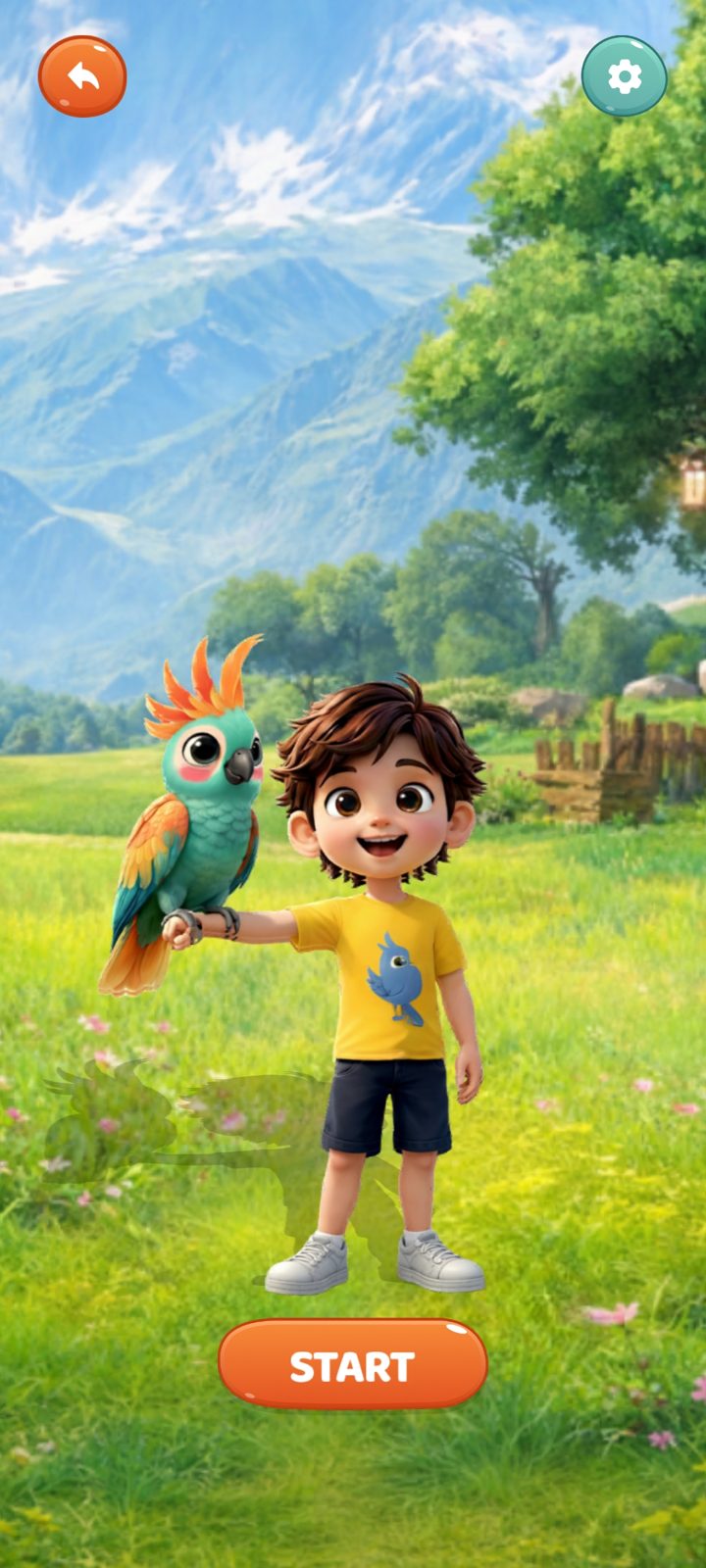
 is an interactive language experience designed for children aged 2–5. Instead of tapping on the screen and watching videos, children practice speaking and responding.
Early prototype – your feedback helps us build the future of language learning for children
- Hello
- مرحبا
- Bonjour
- Hola
- Hallo
- Ciao
- Merhaba
- Olá
- こんにちは
- नमस्ते
They see a word, maybe repeat it once, then move on.
They are asked, they answer, and they are answered back.
Children don’t learn language by watching
Many language apps for children rely on videos, songs, or simple tapping games. Children watch, repeat a word once or twice, and then move on.
But real language learning happens differently.
Children develop language when they respond, interact, and engage in conversation. They need opportunities to speak, react, and feel part of a dialogue.
Yet most digital tools today remain passive experiences, where the child is mostly a viewer rather than an active participant.
Tootur was created to explore a different approach.
A different way for children to learn language
Interactive conversation
Tootur encourages children to speak and respond, not just listen.
The experience is designed to feel like a simple conversation where the child is invited to answer, react, and participate.
Designed for toddlers
The interaction is short, simple, and playful — designed specifically for children aged 2–5, with activities that match their attention span and curiosity.
Learning through play
Children are invited to talk, move, and explore through playful prompts.
The goal is to make language feel natural, joyful, and part of everyday play.
We’re building a very early prototype
Tootur is currently in its earliest stage. We’re exploring one simple idea:
Can a conversational interaction encourage young children to respond and speak more actively?
When the prototype is ready, we’ll invite families from our parent group to try it and simply observe:
- Does your child engage with the interaction?
- Do they attempt to respond or speak?
- Do they enjoy the experience?
Your feedback will help shape the future development of Tootur.
Children learn language fastest when they actively participate, not when they only listen.
Why I started Tootur
Tootur began from a personal experience as a mother raising a child in a multilingual home.
My native language is Arabic — the language of my childhood, my family, and an important part of my identity. As my son grew up surrounded by more than one language, I noticed something interesting.
He began speaking Arabic naturally because I interacted with him consistently. But it took him much longer to start speaking his father’s language. Progress only happened when someone actively engaged him and encouraged him to respond.
This made me realize something simple but powerful: children learn language fastest when they actively participate, not when they only listen.
Around the same time, I noticed many young children around me struggling to express themselves despite using educational apps and watching learning videos.
That raised a question in my mind: what if technology could create an interactive companion that invites children to respond and communicate naturally?
Tootur is my small step toward exploring that possibility.
Help us build something meaningful for children
Tootur is still in its early exploration stage, and parents play an important role in shaping it. When testing opens, the process will be simple:
Try Tootur
Spend a few minutes letting your child play and talk with Tootur.
Observe your child
Notice how they react, whether they try to respond, and how engaged they feel.
Share your feedback
Tell us what worked, what didn’t, and how the experience felt for your child.
Your observations will help us understand how children interact with conversational learning.
Join our early parent group
We are building Tootur step by step and learning directly from families along the way. If you’d like to follow the journey or test future activities, you can join our early parent group.
Members may receive:
- Early prototype activities
- New language experiments
- Opportunities to help shape the product